
2026 Midsize Truck Comparison
Honda Ridgeline vs Toyota Tacoma
Everyday comfort and clever bed utility—or broader configurations, higher towing limits and deeper trail hardware?
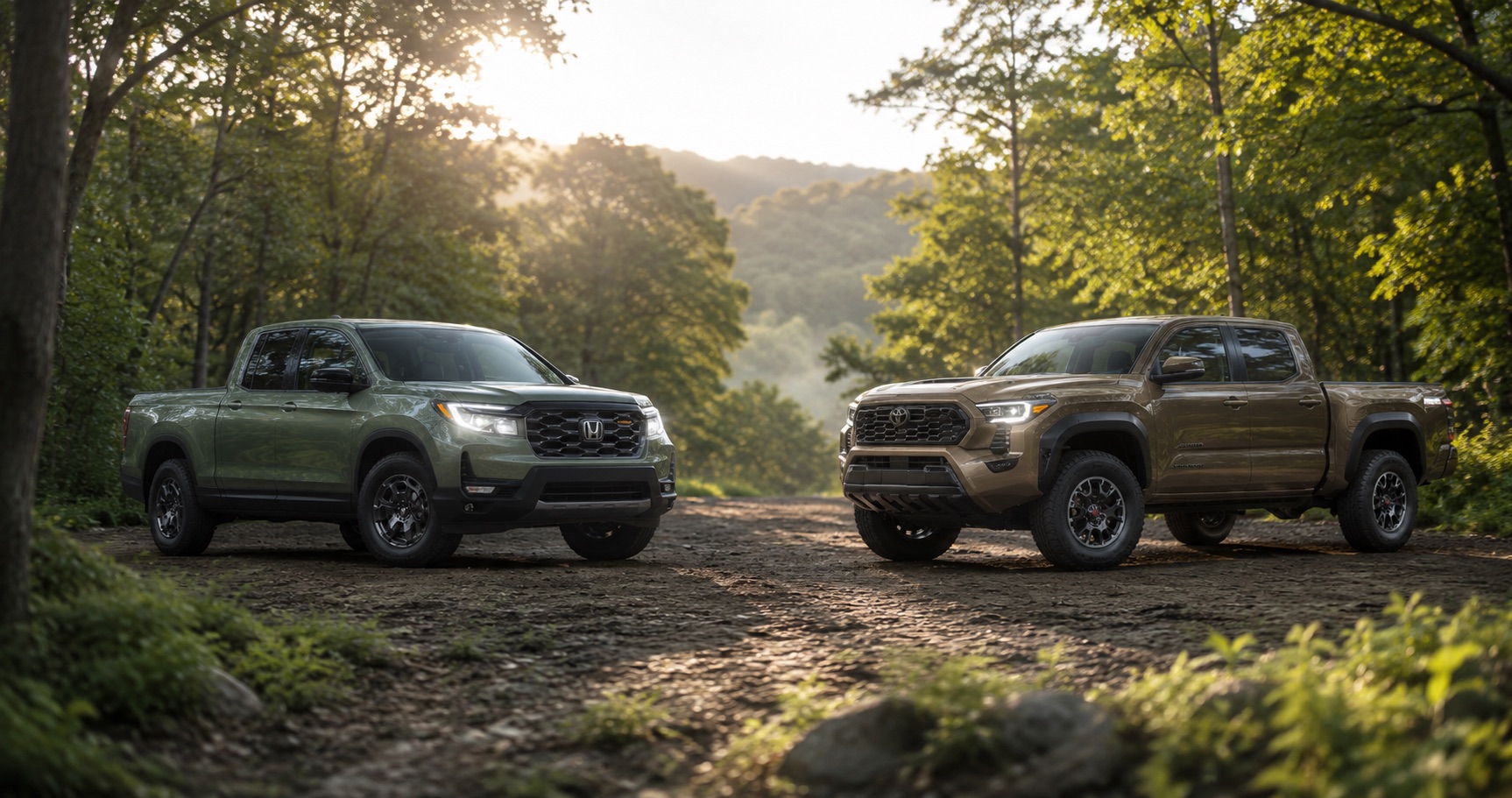
The 2026 Honda Ridgeline and 2026 Toyota Tacoma are two established choices in the midsize pickup segment, appealing to drivers who want truck versatility without stepping up to a full-size model. Both are designed to balance everyday transportation with the flexibility to handle home projects, recreational gear, towing and other pickup-truck duties, which makes them natural competitors for many shoppers.
For Capital Region drivers, that versatility can be especially useful. A midsize truck may spend much of the week commuting between Troy, Albany, Latham or Clifton Park, then take on home-improvement runs, winter weather, outdoor recreation or weekend travel. The Ridgeline and Tacoma approach that broad range of use differently, giving buyers two distinct interpretations of what a midsize pickup should be.
This comparison looks at where those approaches overlap, where they differ and which type of driver each truck may suit best. By looking beyond the nameplates and considering how each model fits real everyday use, you can narrow the choice to the truck that makes the most sense for your priorities.
Start With Your Truck Routine
Which Midsize Truck Deserves Your First Look?
Choose the requirement that shapes your decision most strongly. The result is a first direction—not a universal winner. The detailed comparison below will show whether that first lean still makes sense once towing, cab/bed layout, powertrain and daily comfort are on the table.
Your First Direction
Daily Driving, Winter & Cabin Comfort
Start With the Ridgeline
Who This Favors
Drivers who need a real pickup bed but expect the truck to spend most of its time carrying people, commuting and handling ordinary all-weather driving.
Why It Points Here
Every Ridgeline includes five-passenger crew-cab seating, i-VTM4 AWD, a V6 and fully independent suspension, so the lineup stays focused on an easy-to-live-with daily formula.
Also Compare
Compare a Tacoma Double Cab 4WD if its extra towing/payload capacity or body-on-frame configuration matters enough to outweigh the Ridgeline’s daily-use advantages.
Why the Trucks Feel Different
Two Truck Architectures, Two Different Ownership Strategies
The platform difference helps explain the trucks’ configuration range and road character, but suspension, tires, drivetrain hardware and trim-specific tuning still determine how each one actually behaves.
2026 Honda Ridgeline
One Integrated Truck Formula
On the road: Unibody construction plus independent front and rear suspension supports the Ridgeline’s road-focused ride and handling character.
Configuration effect: Honda bundles the core body and mechanical choices together, so trim selection changes equipment more than it changes the basic truck formula.
Tradeoff: That simplicity gives up the longer-bed, alternate-cab, hybrid/manual and more specialized 4WD branches available on Tacoma.
2026 Toyota Tacoma
A Truck Platform Built to Branch
On the road: Tacoma uses Toyota’s TNGA-F body-on-frame architecture, with coil-spring rear suspension on many Double Cab configurations and trim-specific suspension tuning.
Configuration effect: Toyota uses the platform to support materially different cab, bed, drivetrain and powertrain combinations, so capability and passenger use can change from one Tacoma to another.
Tradeoff: The flexibility pays off when you choose around a specific job; the Tacoma name alone does not tell you the seating, bed, drivetrain or capability you are getting.
The Practical Boundary: How Often Do You Need the Extra Truck?
Ridgeline suits buyers who want one balanced pickup formula to cover most of the week. Tacoma earns its added complexity when a specific higher-capacity, longer-bed or specialized 4WD configuration solves a recurring need.
Compare the Tradeoffs
Ridgeline vs Tacoma by the Decisions That Actually Change Truck Ownership
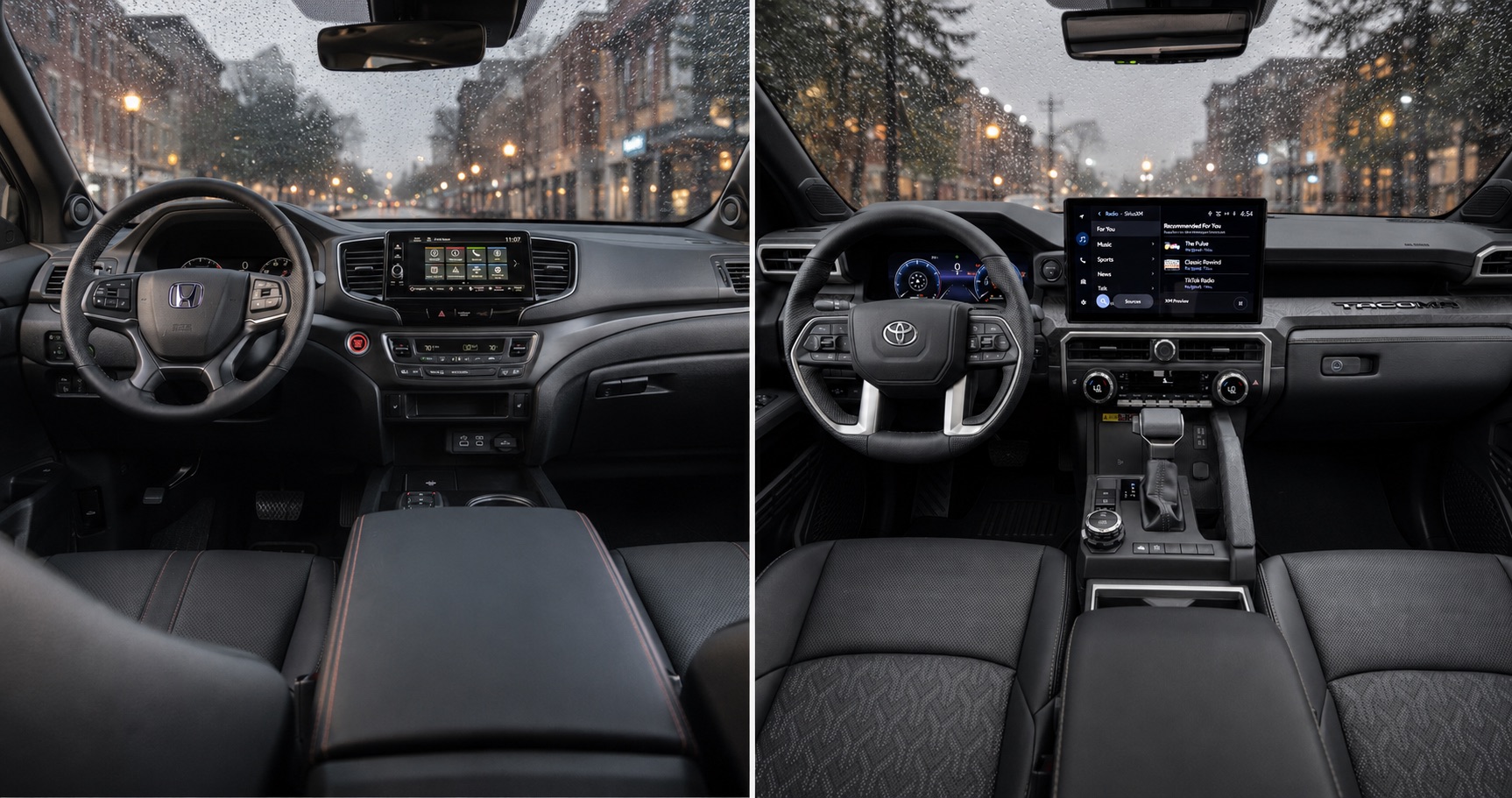
Start with At a Glance, then use the topic controls or Previous/Next buttons to move from powertrain and towing through bed utility, cabin fit, trail hardware, technology, reliability and price.
Explore Current Ridgeline Options
See Which Ridgeline You Would Actually Buy
If the Ridgeline is emerging as the better fit, the next useful step is to compare the trucks that are actually available rather than keep evaluating the model in the abstract. Checking current inventory alongside your trade value can narrow the decision to real trims, equipment and transaction prices before you make a dealership visit.
Where the Truck Decision Lands
Choose the Capability You Will Use, Not the Capability You Might Admire
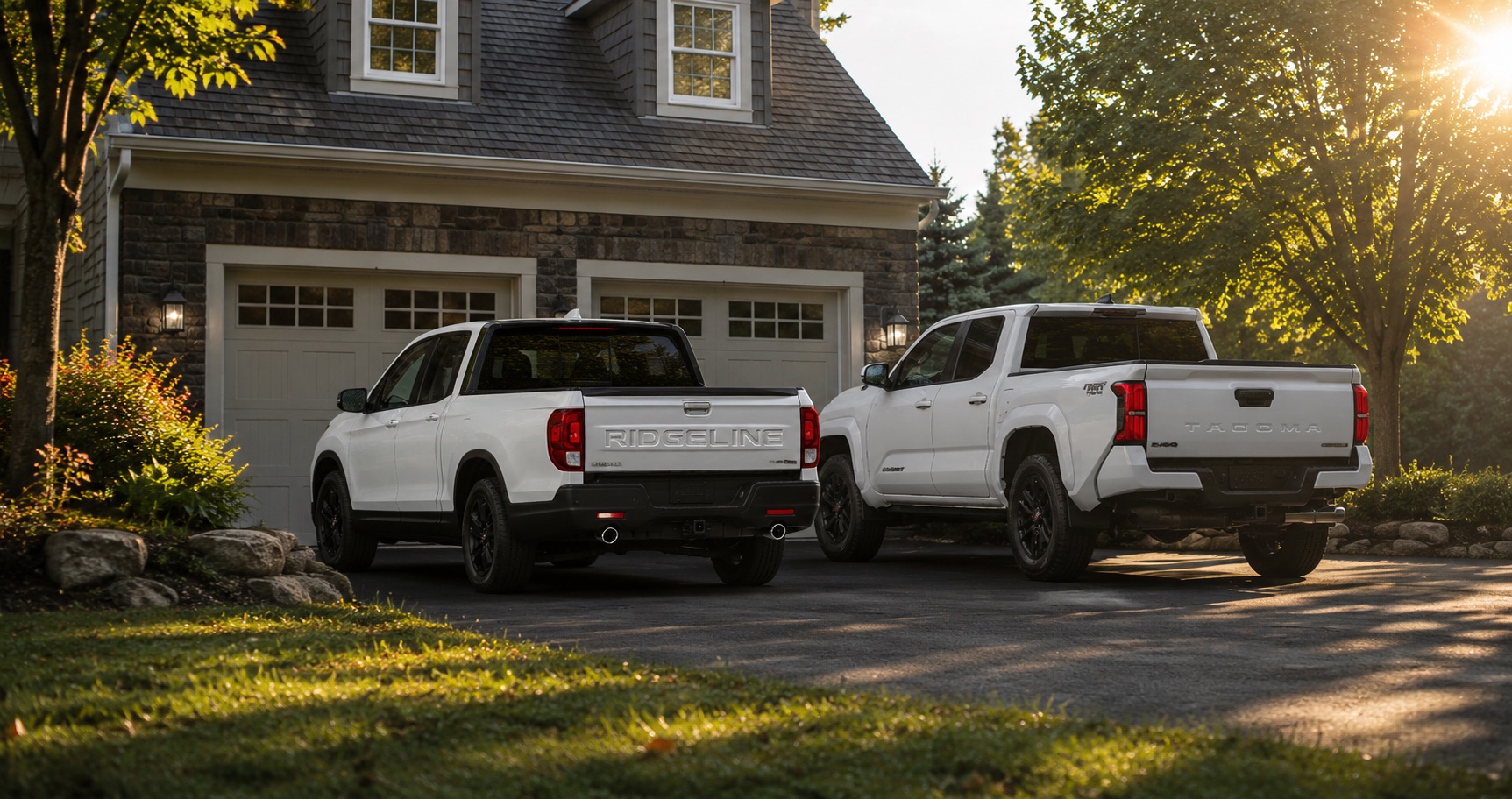
Tacoma is the stronger fit when one of its extra capability branches solves a recurring job—towing beyond the Ridgeline’s 5,000-pound ceiling, a longer-bed or XtraCab layout, a hybrid or manual powertrain, or more specialized 4WD hardware.
If those needs are occasional rather than routine, Ridgeline concentrates more of the truck around everyday passenger use, standard AWD and integrated cargo utility. If both still fit, the remaining question is frequency: which set of advantages will you use more weeks of the year?
Ridgeline vs Tacoma Match Finder
Which Truck Better Matches the Work You Repeat Most Often?
Answer four questions about the truck jobs and tradeoffs you expect to repeat most often. The result is a starting direction, not a universal verdict.
Your Starting Direction
Your match will be calculated here
Your result summary will appear here.
Why It Landed Here
Also Compare
Your comparison note will appear here.
Use the result as a shortlist tool. Compare the exact truck configuration, current transaction pricing, payload label, towing setup and your own driving impressions before deciding.
FAQ: 2026 Honda Ridgeline vs Toyota Tacoma
Answers to the configuration, towing-setup and shopping questions that are easiest to miss in a broad side-by-side comparison.
Why Compare the Ridgeline with Rensselaer Honda?
Rensselaer Honda has been family-owned in Troy since 1977, and that long-term, relationship-focused approach carries into its Simply Better Buying experience. Rather than making shoppers navigate the process on their own, continuously trained Honda Product Specialists can help explain the differences between Ridgeline trims, equipment and accessories in practical terms. That can make it easier to determine what is genuinely useful for your routine before you spend more for features or capability you may not need.
The dealership also offers tools designed to make the purchase itself easier to fit around everyday life. You can complete much of the shopping process online, receive support with your trade and then handle pickup and final signing at the store. For someone balancing work, family schedules or a drive into Troy from elsewhere in the Capital Region, that can mean fewer unnecessary dealership visits and less time spent repeating steps that can be handled before you arrive.
That convenience continues after the sale. Rensselaer Honda uses Honda-trained technicians and offers Express service, online scheduling, vehicle video updates, Uber rideshare and a service shuttle to help keep maintenance from taking over your day. If you stay at the dealership, a quiet waiting room, complimentary snacks and beverages, a kids play area and a dog-friendly environment can make the visit easier for different kinds of households. The practical benefit is a dealership relationship designed around more than the purchase itself: clearer guidance when you are choosing the vehicle, more flexibility when you are buying it and service options that can be easier to work into life once the Ridgeline is in your driveway.
Keep Researching or Start Shopping
Continue with published Rensselaer Honda research articles, or move into the shopping tools that help you price and plan for the Ridgeline you would actually buy.
Research Next
Keep Researching
Ready to Shop?
Find Your Ridgeline
Disclaimers:
*Manufacturer-published starting MSRPs were checked August 25, 2026. Honda Ridgeline MSRP excludes tax, license, registration, a $1,495 destination charge, accessories, premium paint and dealer-specific pricing. Toyota Tacoma MSRP excludes Delivery, Processing and Handling, taxes, title, license, available/regionally required equipment and dealer-specific pricing. Confirm the exact vehicle and current pricing before purchase.
*EPA fuel-economy estimates vary by trim, cab, bed, drivetrain, powertrain and equipment. Actual mileage varies with driving style, traffic, weather, temperature, vehicle condition, loading and other operating factors.
*Towing and payload ratings require the proper vehicle configuration, equipment and loading. Trailer weight, tongue weight, passengers, cargo, accessories and vehicle condition reduce available capacity. Confirm the certification label and owner guidance for the exact truck before towing or loading.
*Bed dimensions, storage volumes and cargo layouts are manufacturer-published figures/designs. Measure unusual cargo and confirm accessory/tonneau compatibility on the specific truck.
*AWD, 4WD, traction modes, Honda Sensing, Toyota Safety Sense, blind-spot systems, cross-traffic alerts, cameras and other driver-assistive technologies have operating limitations and do not replace attentive driving, safe loading or safe vehicle control.
*Car and Driver review observations and instrumented test results used on this page were checked August 25, 2026. Test results apply to the configurations evaluated by the publication and may not represent every trim.
*J.D. Power 2026 Quality & Reliability ratings and Consumer Reports 2026 predicted-reliability information were checked August 25, 2026. The sources use different methodologies and scopes and are not combined into a composite score.
*Inventory, color, trim, equipment, accessories, incentives, offers, finance terms, trade values and transaction pricing can change. Confirm the current listing and window sticker for the specific Ridgeline you are considering.
